
March is the month we recommend most often to clients who are visiting Iceland for the first time at the luxury level. It is not the easiest month. It is not the warmest. It is not the month with the longest days.
It is the month where the most extraordinary Iceland experiences are available simultaneously – and where the difference between visiting independently and traveling with us is most pronounced.
Here is what that week looks like.
Why March In Iceland
March sits at a specific intersection that no other month in Iceland occupies so precisely.
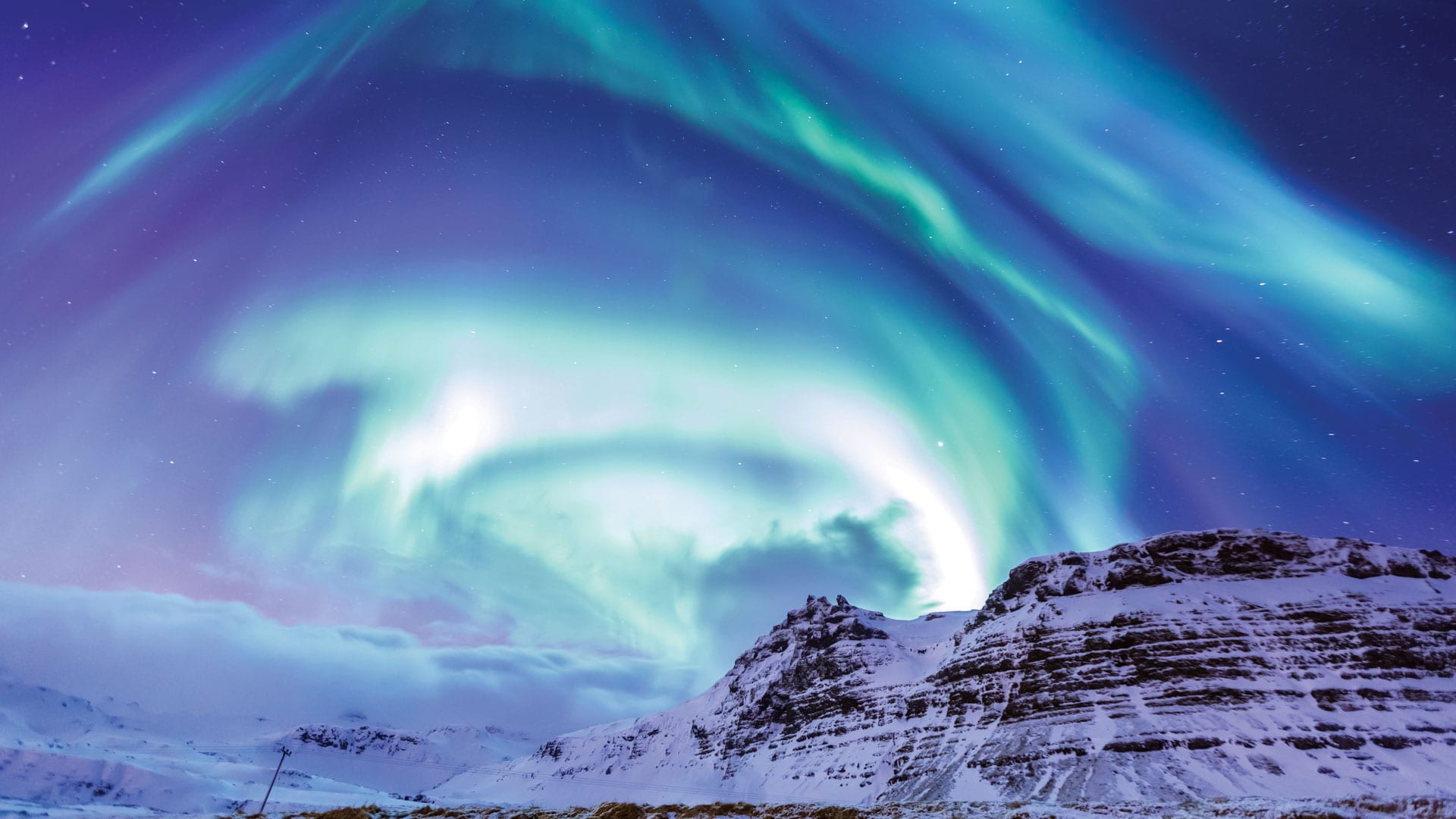
The Northern Lights are still active – solar conditions remain strong and the nights are genuinely dark, which they will not be by May. Ice caves inside Vatnajokull are still accessible, but only just – by April, rising glacier temperatures close them until the following winter. The landscape is still in its full winter form: frozen waterfalls, snow on the lava fields, ice formations on the black sand beaches.
At the same time, daylight is increasing rapidly. Early March gives approximately ten hours of usable light. By the end of the month, that stretches to thirteen hours — more than enough for full itinerary days without the frantic pace that January and February require.
Peak season has not yet arrived. The properties we work with have availability. Our guides are not overextended. The most popular sites are quieter than they will be in June, July and August.
For clients who want Iceland at its most dramatic and its most immersive, March is the answer.
Day One: The Retreat at Blue Lagoon
Every Deluxe Iceland privately guided itinerary begins the same way.
Our driver meets clients at Keflavik Airport – not at a taxi rank, not with a sign at arrivals, but at the gate, having tracked the flight and adjusted for any delay. The vehicle is a premium SUV or luxury transport from our private fleet. The journey to The Retreat at Blue Lagoon takes twenty minutes.
We begin here not because it is convenient – though it is – but because The Retreat sets the correct expectation for everything that follows. The 62 suites are built into the volcanic lava field. The private Retreat Lagoon, accessible exclusively to hotel guests, is a geothermal waterscape of mineral-rich water at 38 to 40 degrees, with lava canyon corridors and in-water service from the adjacent restaurant. This is not the public Blue Lagoon experience. It is quieter, more intimate and more clearly defined by the landscape it exists within.
We recommend two nights here at the start of a March itinerary. The first evening to arrive and decompress. The second day with full access to the subterranean Retreat Spa, the floatation suites and the in-water treatments.
Dinner at Moss restaurant on the second evening. The kitchen reimagines Icelandic ingredients with a rigour that clients consistently describe as one of the finest meals they have had anywhere.
The Northern Lights: What We Actually Do
We do not book our clients onto Northern Lights tours. What we arrange is different in every way that matters.
Our private guides monitor solar activity and cloud cover forecasts from mid-afternoon on every evening during the trip. They do not have a fixed departure time. They contact the client when conditions suggest the best window is approaching – that might be 9pm, it might be midnight. The vehicle is ready. The destination depends on the real-time cloud: a position east of Selfoss where a gap in the weather creates a clear sky corridor, a point on the Reykjanes Peninsula where the Aurora reflects off the sea, or a location further afield if conditions warrant the drive.
The stop lasts as long as the display lasts. There is no schedule to return to.
We cannot guarantee the Northern Lights. Nobody can. What we can do is give clients the best possible chance with the right people, the right vehicle, and a response to conditions that no group tour can replicate.
The clients who see the most extraordinary Aurora are not the ones who booked the most expensive fixed tour. They are the ones who were ready to move when the sky opened.
Vatnajokull: Ice Caves and the Glacier Lagoon
Ice caves inside Vatnajokull, Europe’s largest glacier, require advance booking months before travel. By the time most clients think to arrange this, the available slots are gone.
We hold allocations with the guides we work with exclusively. When a client books a March itinerary with us, ice cave access is arranged as part of the itinerary — not as a separate booking that may or may not be available.
The drive from Reykjavik to the glacier lagoon region takes approximately five hours. We use it. The South Coast is one of the most extraordinary driving routes in Europe — Seljalandsfoss, Skogafoss, the black sand at Reynisfjara, the Eldhraun lava field – and our guides do not treat it as a transit section.
Jokulsarlon glacier lagoon at dawn, before any other visitors arrive, is the kind of experience that justifies the early start. The icebergs in the low March sunrise light hold colours that disappear within an hour. Diamond Beach – where glacial ice washes up on a black sand shore – looks different in early morning cold than at any other time of day.
Inside the ice cave, the guide knows which formations are most significant this season and which chambers are accessible in current conditions. The blue light that filters through ancient glacier ice is a colour that exists nowhere else. The silence inside the glacier is absolute.
Snaefellsnes: Where Our Guides Go Furthest Off the Route
The Snaefellsnes Peninsula is described in many itineraries as a day trip from Reykjavik. We treat it as its own destination, worth an overnight stay, specifically because our guides know the peninsula in a way that a day trip cannot reveal.
The fishing villages of Arnarstapi and Grundarfjordur have a character that the busier tourist sites have lost – local, unhurried, genuinely Icelandic. The Snaefellsjokull glacier volcano at the tip of the peninsula, which Jules Verne chose as the entrance to the centre of the Earth, reveals itself differently depending on weather and light in a way that a fixed itinerary cannot predict but an experienced guide can position perfectly.
In March, with few other visitors and our guide’s knowledge of which viewpoints and timing create the most striking conditions, Snaefellsnes produces photographs that clients consistently tell us are their favorite from the entire trip.
Reykjavik: Done Properly
We include a day in Reykjavik itself – not as a base for excursions but as a destination in its own right.
Our guides know Reykjavik in the same way they know the landscapes: not as a checklist of attractions but as a city with specific restaurants, coffee houses, design studios and cultural institutions worth attention.
Dinner at Dill is arranged by us – Iceland’s only Michelin-starred restaurant, with Chef Gunnar Karl Gislason’s fifteen-course tasting menu built from Icelandic ingredients with a rigour that is unlike any other dining experience in the country. Tables fill weeks in advance. We handle the reservation.
One Honest Note About March
March in Iceland is cold. Temperatures run between -2°C and 4°C with wind that makes it feel colder on exposed sites. The weather does not cooperate with fixed schedules.
This is not a problem with the right guide and the right approach. It is part of what makes the landscape look the way it does.
What is guaranteed in March – regardless of weather – is the landscape in its winter form, the geothermal culture that operates in all conditions, the food, and the ice caves. The Northern Lights are an extraordinary possibility. The rest is certain.
For clients who ask us which month we would personally choose for a first visit to Iceland at this level, the answer is March.
Plan a March Trip to Iceland
Privately guided tours with our local team. Every detail arranged. Let´s get started planning your trip.